
How Thoughtful Design, Sensory Considerations and Team Wellbeing Can Help Improve the Patient Experience
Understanding Dental Anxiety
For many people, visiting the dentist is associated with feelings of apprehension rather than reassurance. Despite significant advances in modern dentistry, dental anxiety remains one of the most common barriers preventing patients from attending appointments regularly. Dental anxiety remains a significant issue for many UK adults, with some experiencing levels of fear severe enough to delay or avoid treatment altogether. (i)(ii)
For dental practice owners, principal dentists and practice managers, this presents both a challenge and an opportunity. While clinical excellence remains fundamental, today’s patients increasingly evaluate their experience based on far more than treatment outcomes alone. Every interaction, from the moment they search for your practice online to the moment they leave following treatment, contributes to their overall perception of care.
In my experience, creating a calming dental practice isn’t simply about aesthetics. Patients don’t usually comment on a diffuser or the colour of the walls. What they often say is that they ‘felt relaxed’ or that the practice ‘just felt different’.
A dental practice that feels welcoming and reassuring may help improve patient satisfaction, support treatment acceptance, encourage repeat attendance and strengthen positive word-of-mouth.
At Scented Sky London, my focus is on helping practices explore simple, practical ways to create a calmer environment for both patients and staff — often without the need for costly refurbishment.
This guide explores the key elements that contribute to a calming dental environment and highlights practical improvements that practices of every size can begin implementing.
Why This Matters

Help reduce patient anxiety

Support greater treatment confidence

Encourage positive patient feedback

Support repeat attendance

Promote staff wellbeing

Help your practice stand out
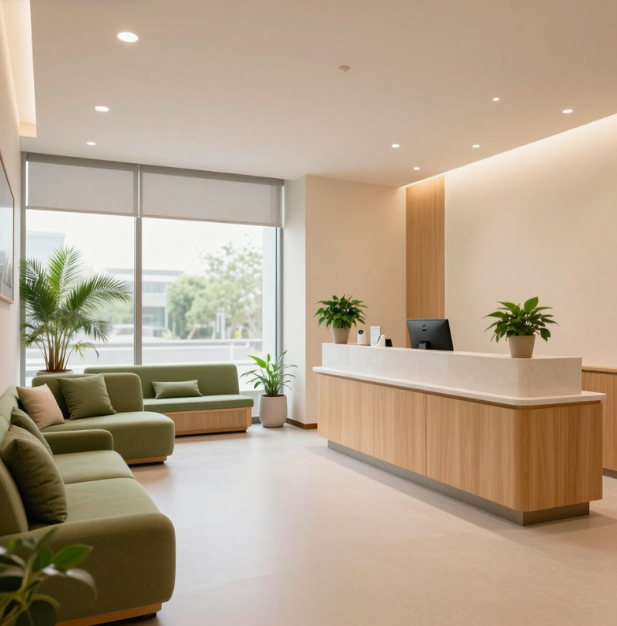
First Impressions Count
Did you know? People form impressions remarkably quickly. In a dental setting, everything from the website and booking process to the reception area, greeting and general atmosphere can influence how reassured a patient feels before treatment even begins. Before a patient ever sits in the chair, their experience has already begun.
Your website sets expectations before they arrive. Clear, calming visuals and easy navigation signal a dental practice that values patient comfort. Thoughtful communication, from booking confirmations to reminder messages, builds trust and reduces pre-visit anxiety.
On arrival, reception staff play a pivotal role. A warm greeting, an organised space and a welcoming atmosphere can immediately help patients feel at ease. Every detail, from lighting and noise levels to communication style and the overall feel of the environment, contributes to that first impression and can influence the patient journey that follows.
The Patient Journey
Creating a calming dental practice requires attention at every stage of the patient journey. From the very first online interaction to post-visit follow-up, each touchpoint can influence the patient’s sense of comfort, reassurance and trust. A holistic approach to environment ensures no moment is overlooked.
Rather than creating a purely functional waiting room, practices should aim to design a space that feels welcoming, comfortable and reassuring.
TOP TIP:
Small sensory changes often have a bigger impact than expensive refurbishments.

1. Pre-visit
Plan with ease. Website, booking and communication.

2. Arrival
Parking, signage and exterior presentation.

3. Reception
Greeting, seating and privacy.

4. Treatment rooms
Comfort, communication and reassurance.

5. Post-visit
Supported follow-up and patient feedback.
Five Pillars of a Calming Practice

Welcoming
first
impressions
Create a warm,
inviting start to
every visit.

Calming sensory
comfort
Consider how
lighting, sound,
scent and
surroundings may
help create a more
comfortable
experience.

Anxiety-aware
communication
Use clear,
compassionate
language that
builds trust and
eases worry.

Supported staff
wellbeing
Support your team
to feel valued,
prepared and able
to communicate
calmly with
patients.

Consistent
patient
experience
Deliver
reliable,
predictable
care at every
touchpoint.
Designing a Calming Reception Area
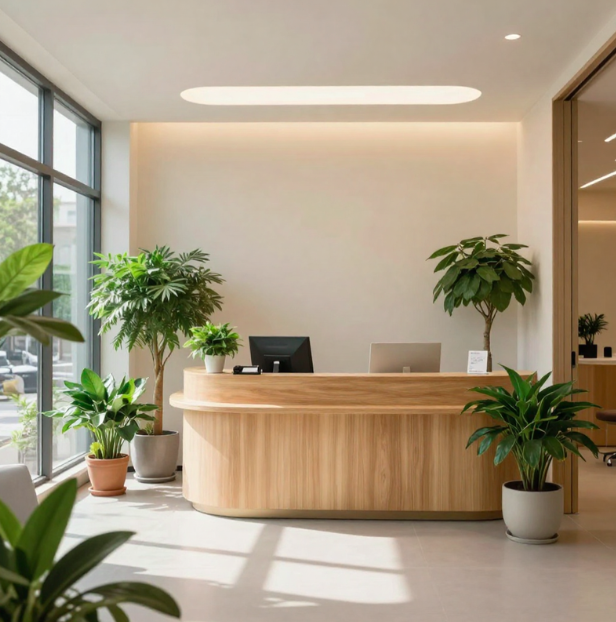
Your reception area sets the tone for the entire patient experience. Thoughtful design choices, from seating to scent, can significantly reduce anxiety before treatment even begins.
Research into healthcare environments suggests that visual and acoustic surroundings can influence patient comfort, anxiety and stress. (iii)
That does not mean a dental practice needs to be completely redesigned. Small changes such as introducing plants, natural textures, softer lighting or more comfortable seating can alter how a reception area feels.
Simple refreshments such as chilled water and herbal teas can make patients feel welcomed while reinforcing a sense of hospitality.
Reception conversations can involve personal or confidential information, so privacy is also an important part of creating a reassuring patient experience.
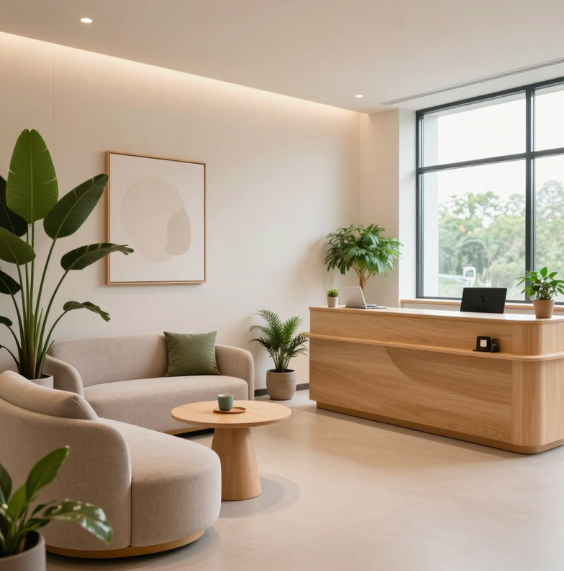
Lighting & Colour Psychology
The Power of Natural Daylight
Natural daylight can contribute to a brighter, more welcoming environment and may support wellbeing for both patients and staff. Maximising access to daylight through windows and skylights creates a more welcoming and restorative environment.
Calming Colour Palettes
Soft greens, gentle blues and warm neutrals are often associated with calmer, more restorative
environments. We recommend avoiding overly bright or highly saturated colours in treatment and reception areas, as these can heighten alertness and tension.
A Layered Lighting Approach
Combine ambient, accent, task, and decorative lighting to create depth and warmth. Avoid harsh fluorescent lighting in patient-facing areas. Warm-toned LED alternatives offer a gentler, more comfortable atmosphere.
The Science Behind It
Research into restorative healthcare environments has long suggested that exposure to natural elements, including daylight, greenery and views of nature, may help reduce stress and support wellbeing. Thoughtful lighting and colour choices are more than decorative decisions; they form part of the wider patient experience. (iv)
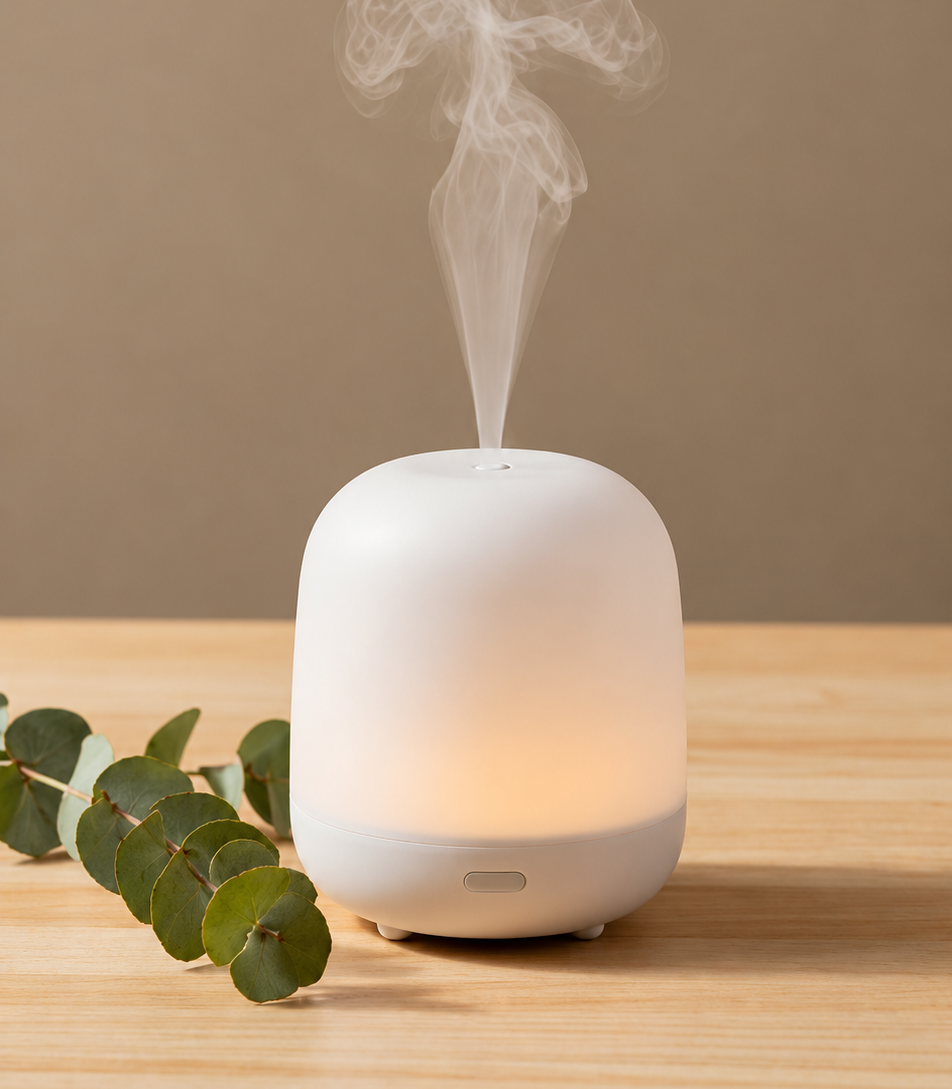
Sound & Scent, the Overlooked Senses
At Scented Sky London, we specialise in helping dental practices introduce essential oils thoughtfully and responsibly. Our recommendations focus on creating a calm, welcoming atmosphere while considering patient sensitivities, staff wellbeing and the practical realities of a busy clinical environment.
Unfortunately, many patients associate the characteristic smell of dental materials with previous unpleasant
experiences. Introducing subtle, carefully selected scents can help create a more welcoming atmosphere. (v)
Research spotlight: A small clinical study explored the use of orange aroma in a dental waiting room. Among the women exposed to the aroma, researchers reported lower state anxiety, a more positive mood and greater calmness compared with the control group. (vi)
The aim is not to treat anxiety, but to consider how thoughtfully chosen aromas may contribute to the overall sensory experience of the practice. (vii)

Lavender
Often associated with relaxation and a calm, restful atmosphere.

Sweet Orange
A fresh, uplifting aroma that can help create a warm and welcoming environment.

Chamomile
A gentle botanical aroma often associated with comfort and calm.

Cedarwood
A warm, grounding aroma that can contribute to a peaceful atmosphere.

Bergamot
A fresh citrus aroma often chosen for its uplifting and calming character.
Music and acoustics shape the patient experience more than most practices realise.
Appropriate background music can help soften clinical sounds and make waiting areas feel less stark. A recent systematic review of clinical trials examining music before dental treatment found evidence of reductions in anxiety and stress. (viii)
Instrumental music, gentle acoustic tracks or nature soundscapes may work well, provided the volume remains low enough for staff and patients to communicate comfortably.
Soft furnishings and sound-absorbing materials can also help reduce echo and excessive noise in reception and waiting areas.
Staff Wellbeing: Impact on Patient Experience
When your team feels supported, your patients feel the difference.
The way a team feels can influence the way patients experience the practice. When staff feel supported, organised and able to communicate without unnecessary pressure, that can be reflected in calmer and more reassuring patient interactions.
- Comfortable staff rooms with natural light and calming décor
- Workload management to reduce stress and rushed communication
- Positive team culture enhances consistency in patient care
- Regular check-ins and open communication build resilience
Supporting your team is part of supporting your patients.

1. Comfortable staff spaces

2. Well-managed workloads

3. Regular check-ins and open communication

4. Lower stress and stronger morale

5. Warmer patient interactions and better care
What a Calmer Patient Experience Can Support
From

- Patients arriving anxious or apprehensive
- Delayed or avoided appointments
- Frequent cancellations or uncertainty around treatment
- Staff working under unnecessary pressure
- An environment that feels clinical rather than welcoming
Towards
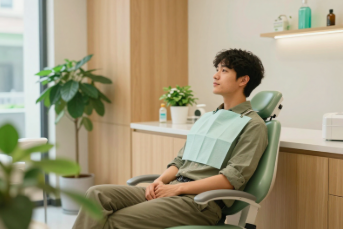
- Patients feeling more comfortable attending
- Greater confidence throughout the patient journey
- Stronger patient relationships and loyalty
- A calmer, more positive working environment
- A practice experience patients feel comfortable recommending
Five Simple Improvements Every Dental Practice Can Make
Small, intentional changes can make a noticeable difference to how patients and staff experience your dental practice.
Download my Calm Dental Practice Checklist for practical ideas that can be considered by practices of any size or budget.
About Scented Sky London
I’m Jan Alexander, founder of Scented Sky London. I work with dental practices to explore thoughtful, practical ways of creating calmer and more welcoming environments for patients and staff.
My approach looks at the whole experience, from first impressions and communication to
sensory considerations such as lighting, sound and carefully selected aromas.
The emphasis is always on practical changes that suit the individual practice rather than a one-size-fits-all solution.

The Next Step
Every dental practice is different, and there is no single formula for creating a calmer patient experience. That is why I begin with a complimentary Discovery Call.
We will look at your patient journey, reception environment and sensory touchpoints,
and identify areas where small, practical changes could make the practice feel more welcoming for both patients and staff.
There is no obligation and no expectation that you need to redesign your practice. The aim is simply to identify what could work well in your particular environment.
Research & Further Reading
(i) Oral Health Foundation Survey 2021
(ii) NHS England Clinical Guide for Dental Anxiety Management
(iii) Effects of environmental design on patient outcomes – a systematic review
(iv) Effects of interior design on wellness – Roger Ulrich
(v) Aromatherapy with essential oils during dental procedures – Journal Dentistry review
(vi) Orange aroma in a dental waiting room
(vii) Aromatherapy and dental anxiety – a systematic review and meta-analysis
(viii) Music, stress and anxiety before dental treatment – a systematic review
